

Your garden can become a magical outdoor space when proper lighting illuminates its natural beauty long after the sun sets. Garden lights installation opens up endless possibilities for extending your outdoor living time while dramatically enhancing your home’s curb appeal. Professional installation ensures your lights create the perfect ambiance while providing essential safety features that protect your family and guests. The right lighting plan transforms even ordinary yards into stunning outdoor retreats that you can enjoy throughout all seasons.
Modern garden lighting systems offer incredible flexibility and energy efficiency compared to traditional outdoor fixtures. Solar-powered options eliminate the need for complex electrical work while providing reliable illumination throughout the night. Low voltage systems deliver professional-quality results with enhanced safety features that protect your family and property. These advanced lighting solutions help you create beautiful outdoor spaces that rival expensive professional landscape designs.
Understanding Garden Lights Installation

Garden lights installation requires careful planning to achieve both stunning aesthetic appeal and practical illumination. The process begins with developing a comprehensive lighting plan that addresses your specific needs while working within your property’s unique layout. Professional installers evaluate your yard’s distinctive characteristics, including mature trees, established walkways, and architectural elements that deserve special highlighting.
Planning Your Lighting Layout
Your lighting plan should identify key areas throughout your property that need illumination for both beauty and safety purposes. Garden path lights guide visitors safely through your outdoor space while creating an inviting atmosphere that encourages evening enjoyment. Strategically placed spotlights can illuminate specific landscape features like specimen trees, colorful garden beds, or interesting architectural details on your house exterior.
Security considerations play an increasingly important role in modern outdoor lighting design. Strategic placement of lights near main entrances, garage areas, and previously dark corners helps deter unwanted visitors while improving visibility. Motion-activated fixtures provide additional security benefits while conserving energy when areas remain unoccupied.
Quick tip: Walk your property during nighttime hours before installation begins to identify dark spots that need illumination and determine the most effective light placement locations.
Landscape Lighting Fundamentals
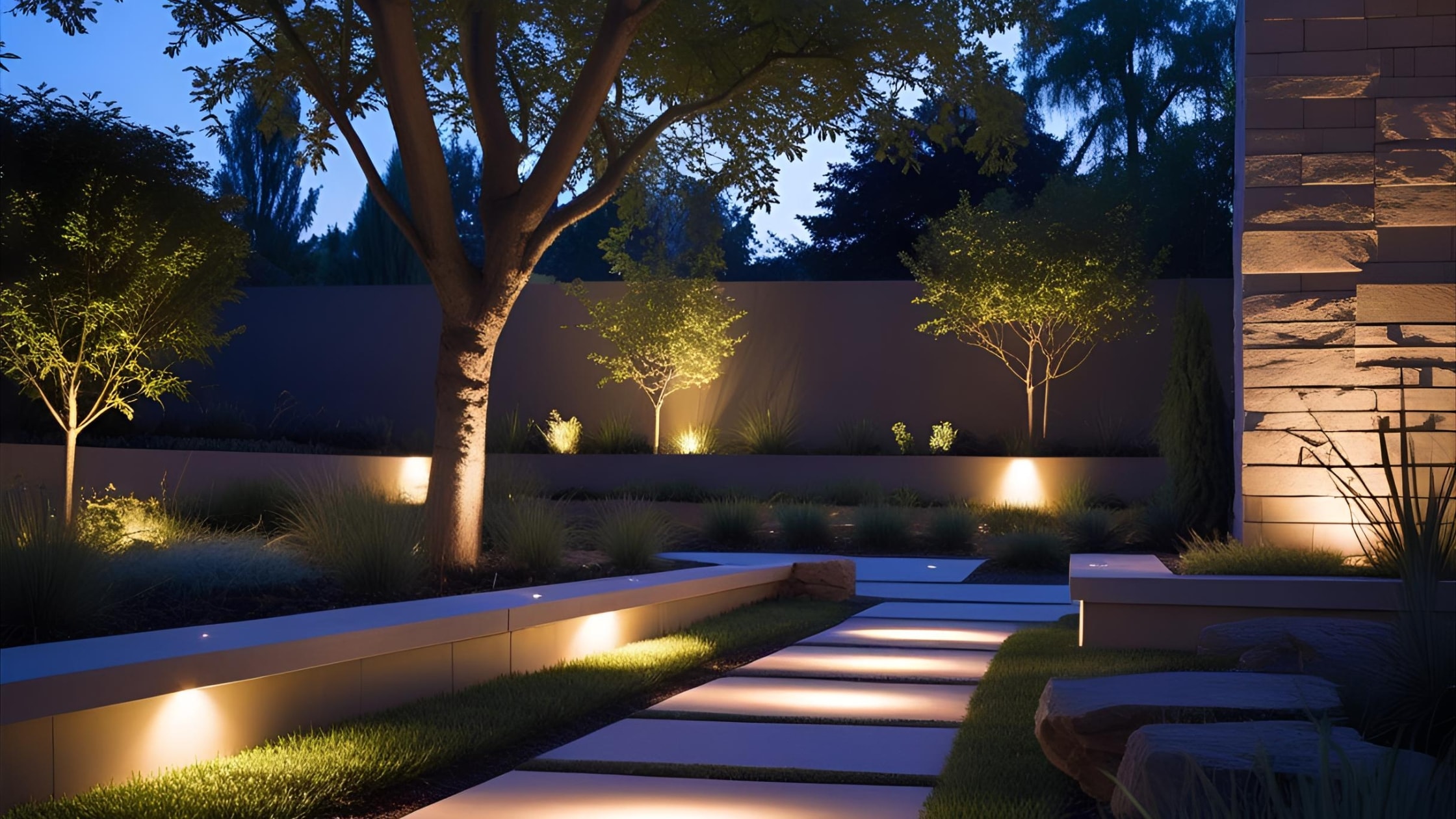
Landscape lighting encompasses various types of fixtures specifically designed to enhance your outdoor environment in different ways. Path lights line walkways and garden borders to provide safe navigation while adding visual appeal. Spotlights create dramatic lighting effects by highlighting specific landscape features or architectural elements that deserve attention.
Types of Landscape Lighting Systems
Low voltage lighting systems offer the perfect balance of outstanding performance and enhanced safety for most residential applications. These efficient systems operate at a safe 12 volts instead of standard household voltage, significantly reducing the risk of electrical shock. The lower voltage also allows for much easier installation and future modification of your lighting layout.
Solar lights provide an environmentally friendly alternative that requires no electrical connections or ongoing energy costs. Modern solar fixtures offer dramatically improved battery life and much brighter illumination compared to earlier models. These lights work best in areas that receive direct sun exposure for several hours each day.
Traditional line voltage systems deliver maximum brightness and reliability for large properties or demanding commercial applications. These powerful 120-volt systems require professional installation to ensure compliance with electrical codes and safety standards. They provide consistent illumination regardless of weather conditions or seasonal changes.
Did you know: Low voltage lighting systems typically use 80% less energy than traditional line voltage fixtures while providing comparable illumination levels.
Outdoor Lighting Design Principles

Outdoor lighting design follows specific principles that create beautiful and functional illumination throughout your property. Layered lighting combines different fixture types and techniques to achieve professional results that rival expensive landscape designs. This approach uses ambient, task, and accent lighting working together to create visual depth and interest.
The same layered approach can improve lighting inside your home. Explore Light Up Your Bedroom Retreat with Ceiling Fixtures for ideas on combining ambient, task, and accent lighting to create a comfortable and functional bedroom.
Creating Visual Depth
Uplighting creates stunning dramatic effects by illuminating trees, walls, or architectural features from below using ground-level fixtures. This technique adds perceived height and visual dimension to your outdoor space while highlighting your property’s most attractive features. Downlighting from trees or elevated structures provides gentle ambient illumination that mimics natural moonlight.
Pathway and Safety Lighting
Path lighting ensures safe navigation while clearly defining the boundaries of walkways, driveways, and garden areas. These essential fixtures should provide adequate illumination without creating harsh glare that impairs vision. Proper spacing between fixtures prevents dangerous dark spots while avoiding excessive over-illumination that wastes energy.
Cross-lighting uses multiple strategically positioned light sources to eliminate harsh shadows and create even illumination. This technique works particularly well for highlighting outdoor living spaces like patios, decks, and seating areas where people gather for entertainment.
Light Fixtures Selection Guide

Light fixtures come in countless styles and configurations designed to match any architectural style or landscape design preference. Traditional lantern-style fixtures complement classic home designs while providing reliable illumination for entryways and pathways. Modern fixtures feature clean lines and contemporary materials that enhance minimalist landscape designs.
Durability and Weather Resistance
Outdoor fixtures must withstand harsh weather conditions including rain, snow, extreme temperatures, and strong winds. Look for fixtures with appropriate IP ratings that indicate their tested level of water and dust resistance. Marine-grade materials like solid brass, pure copper, and stainless steel provide excellent durability in challenging outdoor environments.
LED Technology Benefits
LED technology offers superior energy efficiency and extended operational life compared to traditional incandescent or halogen bulbs. Quality LED fixtures produce significantly less heat while delivering bright, consistent illumination for decades. Many advanced LED systems include convenient dimming capabilities and color-changing features for enhanced versatility.
Fixture placement affects both lighting performance and long-term durability of your outdoor lighting system. Install fixtures in locations that provide optimal illumination while protecting them from physical damage. Consider maintenance access when selecting fixture locations to ensure easy bulb replacement and cleaning.
Landscape Lighting Installation Process

Landscape lighting installation begins with careful site preparation and precise layout marking to ensure optimal results. Professional installers mark all fixture locations and cable routes before beginning excavation work. This planning phase prevents damage to existing utilities and ensures optimal lighting performance.
Electrical Requirements and Safety
Most residential landscape lighting systems require a dedicated electrical circuit from your home’s main electrical panel. A qualified electrician should handle all electrical connections to ensure compliance with local codes and safety standards. The circuit must include proper GFCI protection to prevent electrical shock in wet outdoor conditions.
If your home’s panel is outdated or nearing capacity, broader electrical improvements may be needed before adding new outdoor circuits. Learn how to monitor power use and support future upgrades in Boost Efficiency with a Smart Electrical Panel.
Power Supply and Transformers
Low voltage transformer installation requires careful attention to proper sizing and strategic placement considerations. The transformer converts standard household voltage to safe 12-volt power that feeds your lighting fixtures. Proper transformer sizing ensures adequate power supply for all connected lights while preventing system overload.
Cable Installation
Cable installation involves running specialized low voltage wire from the transformer to each fixture location throughout your property. Cables should be buried in a shallow trench at the proper depth to prevent damage from foot traffic or garden tools. Direct burial cable designed for outdoor use provides reliable performance for decades.
Quick tip: Mark your lighting cable routes with landscape paint before installation to avoid accidentally damaging buried cables during future yard work.
Exterior Lighting Installation Considerations

Exterior lighting installation requires coordination with existing electrical systems and established landscape features. Professional installers evaluate your home’s electrical capacity to determine if upgrades might be needed to support additional lighting loads. Bring Your Home Up to Speed with Electrical Upgrades provides valuable information about electrical system improvements.
Working with Existing Infrastructure
Existing irrigation systems, underground utilities, and landscape features affect lighting installation planning. Always call utility companies before excavation to mark underground lines and prevent dangerous accidents. Professional installers coordinate with other contractors to avoid conflicts during installation.
Access and Power Considerations
Access to electrical power determines transformer placement and affects overall system design. The transformer should be located near an existing outlet while remaining accessible for maintenance. Weatherproof enclosures protect transformers from moisture and physical damage.
Ground conditions affect installation methods and timeline for completing your lighting project. Rocky soil or heavily rooted areas may require specialized equipment for trenching and fixture installation. Professional installers adapt their methods to work efficiently in various soil conditions.
GFCI Outlet Requirements and Safety

GFCI outlet protection is mandatory for all outdoor electrical installations to prevent electrocution hazards. These specialized safety outlets detect ground faults and shut off power within milliseconds to protect users from electrical shock. All outdoor lighting circuits must include GFCI protection to meet current safety codes.
Installation Standards
Local electrical codes specify requirements for outdoor lighting installations including circuit protection, wire types, and burial depths. Professional electricians understand these requirements and ensure your installation meets all applicable standards. Mastering Your Electrical Needs: The Essential Guide offers comprehensive information about electrical safety and code compliance.
GFCI outlet placement affects both safety and convenience for your outdoor lighting system. Outlets should be easily accessible for maintenance while remaining protected from weather exposure. Regular testing ensures continued safety performance throughout your lighting system’s life.
Advanced Lighting Installation Techniques

Advanced lighting installation techniques create professional results that enhance your property’s value and appeal. Multiple switching options allow you to control different lighting zones independently for various occasions. Timer controls and smart switches provide convenient automation while reducing energy consumption.
Smart Technology Integration
Modern outdoor lighting systems integrate with home automation platforms for enhanced control and energy efficiency. Smart switches allow you to adjust lighting levels remotely and create custom schedules for different seasons. Some systems include sensors that automatically adjust brightness based on ambient light conditions.
Wireless Control Systems
Wireless control systems eliminate the need for complex control wiring while providing flexible lighting management options. These systems use radio frequency or WiFi connections to communicate between controllers and fixtures. Battery-powered fixtures with wireless controls offer installation flexibility in areas where running cables is impractical.
Color-changing LED systems create dramatic effects for special occasions and seasonal displays. These fixtures can produce millions of color combinations while maintaining energy efficiency. Programmable controllers allow you to create custom light shows throughout your outdoor space.
Maintenance and Troubleshooting

Regular maintenance ensures your outdoor lighting system continues to provide reliable performance and beautiful illumination. Clean fixtures periodically to remove dirt and debris that can reduce light output. Replace bulbs promptly to maintain consistent illumination levels throughout your system.
Seasonal Care
Seasonal changes affect lighting performance and may require adjustments to timer settings and fixture positions. Trim vegetation that grows to block light fixtures or create unwanted shadows. Winter weather can damage fixtures if proper precautions are not taken to protect your investment.
Solar Light Maintenance
Outdoor solar light fixtures require special attention to photovoltaic panels and battery systems for optimal performance. Clean solar panels regularly to maximize energy collection efficiency. Replace rechargeable batteries every few years to maintain adequate runtime and brightness levels.
Professional maintenance services can identify potential problems before they cause system failures or safety hazards. Annual inspections verify proper operation of GFCI protection, transformer performance, and fixture condition. According to the International Association of Lighting Designers, professional maintenance extends system life while ensuring optimal performance and safety.
Creating Your Perfect Outdoor Lighting System
Transform your outdoor space into a beautiful and functional extension of your home with professional garden lighting installation. Quality outdoor lighting enhances your property’s safety, security, and aesthetic appeal while providing years of enjoyment for your family and guests. Whether you choose energy efficient LED fixtures, convenient solar lights, or sophisticated low voltage systems, proper planning and professional installation ensure optimal results.
Your landscape lighting investment creates lasting value that extends your living space beyond your home’s walls. From illuminating garden paths and highlighting landscape features to providing security around your house exterior, the right lighting plan meets your specific needs while complementing your property’s unique character. Work with qualified professionals who understand local electrical codes and safety requirements to create the outdoor lighting system that transforms your yard into the retreat you’ve always envisioned.